
Wood Siding Replacement in Bowie, MD
Wood siding replacement is for Bowie homeowners whose existing wood cladding is rotting, splitting, peeling, or simply past its serviceable life. Because wood demands ongoing maintenance and absorbs moisture over time, the question is often whether to re-side with new wood, switch to engineered wood, or move to a lower-maintenance material like vinyl or fiber cement — and the right answer depends on the home and the homeowner.
Bowie Window and Siding replaces wood siding for homeowners throughout Bowie, Maryland, inspecting the sheathing and weather barrier the removal exposes and installing the replacement that genuinely fits the home — not the same answer every time.
REQUEST A FREE ESTIMATE
Tell us about your home improvement project and we will connect with you to review style, material, and scheduling options.
Signs Older Wood Siding May Need Replacement
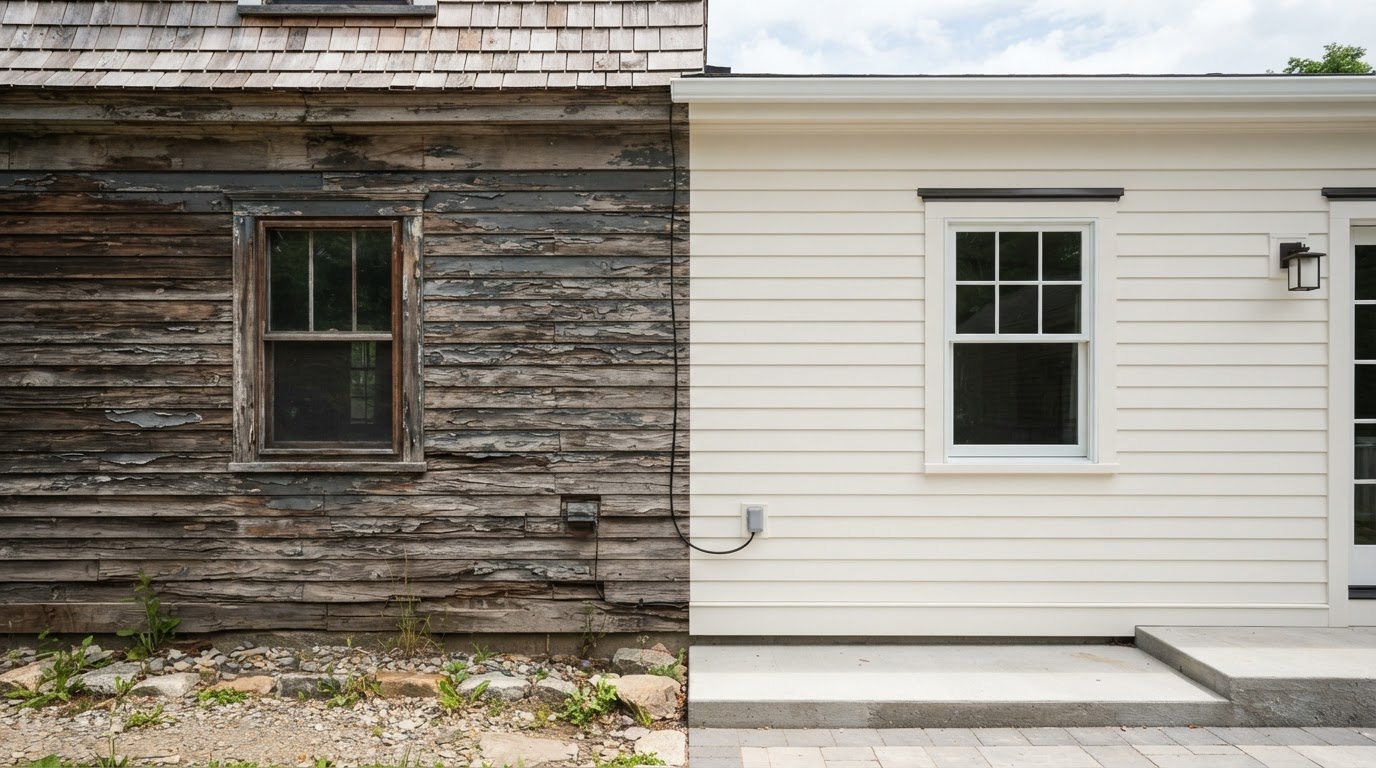
Wood siding shows its age in ways that are hard to ignore. Boards rot where moisture has been trapped; paint and stain peel and flake after years of exposure; boards split and crack as the wood expands and contracts with the seasons; and warping pulls panels out of flat. For homes near Bowie, where humid summers and wet weather keep wood damp, these signs tend to accumulate until the maintenance load becomes larger than a homeowner wants to keep up with.
Replacement is usually worth considering when the deterioration is broad rather than isolated — when several walls are involved, when the same boards keep failing, or when the sheathing behind the siding may have been reached by moisture. It is also a choice a homeowner makes when they want to step off the wood maintenance cycle entirely and move to a lower-upkeep material.
Rot & Softness
Boards that are soft, crumbling, or darkening where moisture has been trapped against the wood.
Peeling & Flaking
Paint or stain that is failing broadly and no longer protects the wood beneath.
Splitting & Cracking
Boards split along the grain from years of expansion and contraction with the seasons.
Warping & Loose Boards
Boards that have cupped, warped, or pulled loose from the wall at the fasteners.
Insect-Related Damage
Possible insect activity as a condition to have checked — not a diagnosis of infestation.
Repeated Repainting
When the repainting cycle has shortened and upkeep no longer keeps up with the wear.
Wood Siding Replacement Material Options
Replacing wood siding opens a choice about what goes back on the wall. New natural wood keeps the original look but carries the same maintenance demand. Engineered wood offers a wood appearance with more dimensional stability. Vinyl removes the painting cycle and resists the moisture that rots wood. Fiber cement gives a wood-grain texture with a longer-lasting painted finish. None is universally best — the right replacement is the one that fits the home and the homeowner's priorities.
New Wood Siding
Replaces the original cladding with new natural wood for the authentic look, with the same ongoing maintenance.
Engineered Wood
A wood-based manufactured product with a wood-grain appearance and more consistent, stable boards.
Vinyl Siding
Removes the painting and staining cycle and resists the moisture that rots wood, in many profiles.
Fiber Cement
A wood-grain-textured, non-combustible option with a painted finish that holds longer than wood.
We clearly distinguish a localized wood siding repair — fixing a single rotted board — from a larger replacement project that removes cladding across one or more walls and inspects the sheathing beneath. The scope depends on how far the deterioration has spread, which we assess honestly during the estimate.
Wood Siding, Moisture & Maryland Weather
Wood siding and Maryland moisture are in a constant negotiation. Humid summers keep wood damp; rain works into joints and ends where paint has worn; and the freeze-thaw and expansion-contraction cycles of the seasons open the cracks that let more water in. Over years, that cycle is what turns a sound wood wall into one that needs replacement.
The upside of a wood siding replacement is that removing the old cladding exposes the sheathing, weather barrier, and flashing beneath — and any moisture damage that was hidden can be repaired before the new siding goes on. We do not claim that Maryland weather automatically causes a particular defect, only that the climate is part of why wood siding eventually needs replacing, and that the replacement is the moment to address what the weather has reached.
Wood Siding Replacement Questions, Answered
Direct answers about replacing wood siding for Bowie homeowners.
Have a question about your home? Call 240-892-7205
Replace Deteriorated Wood Siding With the Right Material
A wood siding replacement is a chance to stop the rot-and-repaint cycle, inspect the sheathing and barrier the removal exposes, and put a material back on the wall that fits the home and the maintenance a homeowner actually wants — whether that is new wood, engineered wood, vinyl, or fiber cement.
Bowie Window and Siding helps homeowners in Bowie, Maryland choose and complete a wood siding replacement honestly. We also serve homeowners throughout nearby Maryland communities.